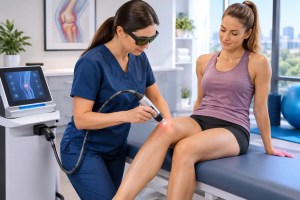
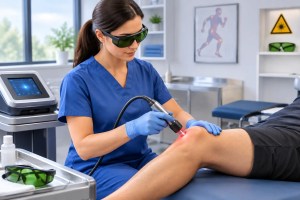
A clinician comparing an infrared laser versus cold laser is often comparing two labels that describe different aspects of therapeutic light. One label typically refers to wavelength. The other is a historical industry term that may refer to lower-power devices, treatment style, or a marketing category. Treating them as direct opposites can lead to a poor equipment decision.
For healthcare and veterinary professionals, the more useful question is not simply which category is better. It is whether a system can deliver an appropriate dose to the intended treatment area, fit the pace of the practice, support consistent protocols, and be used confidently by the clinical team.
Infrared Laser Versus Cold Laser: The Core Distinction
Infrared describes light beyond the visible red spectrum. In therapeutic laser discussions, near-infrared wavelengths are commonly used because they are not visible to the eye and are selected for their interaction with tissue. An 810 nm wavelength, for example, is near-infrared and is widely used in therapeutic laser platforms.
Cold laser is a less precise term. It traditionally described low-level laser therapy devices that produce little or no noticeable surface warmth during a session. Many providers also use it to describe photobiomodulation-focused treatments, lower-output lasers, or even LED devices. The term does not reliably tell a buyer the wavelength, output power, beam profile, dose delivery, or treatment time.
That distinction matters in a purchasing conversation. A laser can use infrared light and operate at a relatively low output. Another infrared system can deliver substantially more power and create a purposeful warming sensation at the treatment site, depending on settings, technique, tissue characteristics, and session duration. The presence of infrared light does not automatically mean a device is high power, and the phrase cold laser does not establish clinical capability on its own.
Why Heat Is Not the Only Decision Point
Heat is one of the most visible differences between treatment experiences, so it often dominates the conversation. But it is only one variable. Therapeutic laser delivery depends on wavelength, average power, pulse structure, spot size, treatment time, movement of the handpiece, target depth, skin and coat characteristics, and the intended clinical objective.
Lower-output systems may be appropriate when a provider wants a gentler delivery profile, is working around sensitive areas, or has time for longer sessions. Higher-power systems may allow providers to deliver a planned energy dose in less time, which can be meaningful in a busy clinic, sports setting, or veterinary practice. Greater output also requires sound training, appropriate technique, and controls that help the operator manage patient comfort and tissue response.
Surface warmth should not be used as a shortcut for effectiveness, just as the absence of noticeable warmth should not be treated as proof of a better approach. A well-designed protocol accounts for the anatomical region, patient presentation, treatment goals, device parameters, and clinical judgment. For veterinary applications, coat type, pigmentation, patient tolerance, and the ability to maintain safe handpiece movement add further practical considerations.
Power Changes Workflow More Than a Label Does
The operational difference between devices is often best understood through treatment throughput. If a practice has a full schedule, a system that requires extended time for each area may limit the number of sessions the team can deliver without disrupting adjustments, exams, rehabilitation, or other services.
Conversely, a higher-output system is not inherently the right fit for every office. Providers should evaluate whether the platform offers protocols that guide settings and technique, whether staff can be trained to use it consistently, and whether the practice has a clear process for scheduling and documenting sessions. Technology becomes valuable when it is used predictably, not when it sits in a treatment room because the workflow feels unclear.
What Wavelength Can Tell You
Wavelength is a fundamental technical specification because it influences how light interacts with tissue. Yet it should be assessed in context rather than treated as a stand-alone performance claim. A device’s wavelength does not reveal the complete treatment experience without knowing its power delivery, pulse pattern, optical design, and protocol guidance.
Near-infrared wavelengths, including 810 nm, are commonly selected for therapeutic laser systems intended for musculoskeletal applications. Providers evaluating these systems should ask how the wavelength is paired with the device’s delivery method. Is power distributed across a practical treatment area? Does the system provide a repeatable approach for different body regions? Are treatment instructions clear enough for the entire team to follow?
For a practice considering an infrared platform, these questions are more useful than broad claims about penetration or category superiority. Tissue is biologically variable, and clinical laser use should be based on device labeling, training, patient-specific considerations, and professional judgment.
Regulatory Language Matters in Equipment Evaluation
Terms such as therapeutic laser, cold laser, high-power laser, Class IV laser, and infrared lamp are frequently used in the market. They do not all mean the same thing from a regulatory, technical, or clinical perspective. Buyers should request clear documentation on the specific device they are considering rather than relying on category labels.
For example, an FDA-cleared device should be discussed according to its cleared intended use. Diowave laser systems are FDA-cleared as infrared lamps intended to provide topical heating for the temporary relief of minor muscle and joint pain, muscle spasms, stiffness associated with minor arthritis, relaxation of muscle tissue, and temporary increases in local circulation.
That language provides an appropriate framework for patient communication, documentation, and marketing. It also helps practices avoid overstating what a technology is intended to do. A responsible implementation plan uses cleared indications, informed consent processes where appropriate, and careful clinical documentation rather than broad disease-based claims.
How to Compare Systems Beyond Infrared and Cold Laser Labels
A practical comparison begins with the patients and cases your practice sees most often. A sports medicine clinic may prioritize efficient treatment of larger muscle groups between training and rehabilitation sessions. A chiropractic or physical medicine practice may focus on integrating laser sessions around existing visit flow. A veterinary or equine provider may need portability, durable equipment, and protocols suited to different species and anatomical areas.
Then evaluate the following operational questions as a connected system, not as a feature checklist:
- How much treatment time does the platform require for the areas your team sees most frequently?
- What wavelength, power range, pulse options, and beam delivery characteristics does it provide?
- Does the system offer clinically relevant protocol guidance without replacing provider judgment?
- How will staff schedule, prepare for, deliver, and document sessions?
- What onboarding, clinical training, troubleshooting, and long-term implementation support are included?
The final question is frequently underestimated. A laser purchase is not simply an equipment transaction. It introduces a new service line that requires staff confidence, patient education, protocol consistency, pricing decisions, and periodic review of utilization. A capable device without a practical implementation process can fail to become part of daily care.
The Value of Guided Treatment Workflows
Protocol software can reduce friction for teams that want consistency across providers and staff members. The strongest systems do not present automation as a substitute for clinical assessment. Instead, they provide a structured starting point that helps operators select parameters, track session delivery, and follow established workflows.
This is particularly valuable for multi-provider practices and organizations with clinical turnover. Physician-developed AI treatment software and guided protocols can support repeatable workflows while allowing the treating professional to make appropriate adjustments. For veterinary teams, guided workflows can also help standardize delivery across species while respecting individual patient tolerance and handling needs.
Choosing the Right Fit for Your Practice
The infrared laser versus cold laser decision is rarely resolved by one specification. A lower-output, low-heat approach may fit a provider’s treatment philosophy, patient population, and schedule. A higher-power infrared platform may be a stronger fit when treatment efficiency, larger-area coverage, and a more scalable private-pay workflow are priorities. Both require thoughtful protocol selection and trained operation.
Before purchasing, ask for a demonstration that reflects real use in your setting. Assess handpiece ergonomics, portability, setup time, protocol navigation, safety features, and how easily treatment can be incorporated into a normal appointment. Discuss what happens after installation: who trains the team, how clinical questions are handled, and how the practice will measure adoption over the first several months.
The best laser system is the one your team can use appropriately, consistently, and confidently within the standard of care you already provide. Clear technology specifications, FDA-cleared intended-use language, meaningful training, and an implementation plan will take a practice much further than any single label on the device.