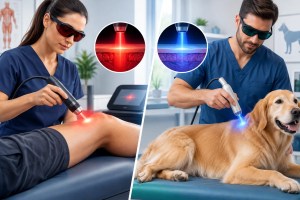
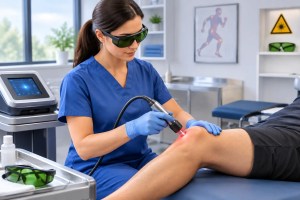
A therapeutic laser system can look like a straightforward equipment purchase until it reaches the treatment room. Then the questions that determine success become much more practical: Can the provider deliver a consistent protocol? Will staff understand when and how to use it? Does it fit appointment flow? Can the practice communicate its role appropriately and build a sustainable private-pay offering around it?
For healthcare and veterinary professionals, the right therapeutic laser systems are not defined by one specification alone. Wavelength, power, treatment delivery, software guidance, portability, training, and ongoing clinical support all shape whether a platform becomes a dependable part of care or an underused device in a storage room.
Start With the Cleared Indication and Clinical Role
Any evaluation should begin with the device’s FDA clearance and intended use, not marketing language. For example, Diowave systems are FDA-cleared as infrared lamps intended to provide topical heating for the temporary relief of minor muscle and joint pain, muscle spasms, and stiffness associated with minor arthritis; for relaxation of muscle tissue; and for temporary increases in local circulation.
That framing matters in both clinical documentation and patient communication. Therapeutic laser technology can be positioned as a non-invasive modality within a broader plan of care, rather than as a replacement for medical evaluation, rehabilitation, medication management, surgery, or other indicated interventions.
In practice, providers often assess laser therapy as an adjunct for musculoskeletal complaints, recovery-focused care, rehabilitation programs, and difficult chronic presentations. Veterinarians and equine practitioners may evaluate it for comparable goals within species-appropriate clinical workflows. The appropriate use case, protocol, and expected response will vary by patient, anatomy, tissue depth, clinical history, and the provider’s professional judgment.
Power Delivery Is More Than a Number
High wattage attracts attention because it may support efficient treatment delivery across larger areas. But advertised power alone does not explain how a system performs at the point of care. Providers should ask how the system manages energy delivery, whether protocols are repeatable, and how the technology supports safe, practical treatment times.
A platform with appropriate power delivery can help a busy practice treat targeted areas without creating an operational bottleneck. That is particularly relevant for sports medicine, physical medicine, chiropractic, pain management, and veterinary settings where appointment schedules may already include hands-on care, exercise instruction, diagnostics, or other modalities.
The trade-off is that greater capability requires a clear clinical workflow. A device should help the clinician control treatment parameters rather than add uncertainty. This is why power, wavelength, and software should be evaluated together instead of as separate checklist items.
Why wavelength deserves a practical review
Wavelength influences how a provider thinks about tissue interaction and treatment planning. An 810 nm wavelength is commonly used in therapeutic laser applications and is a central consideration for practices seeking infrared-based topical heating. Yet wavelength should not be treated as a shortcut to a clinical decision.
Ask how the manufacturer translates the technology into protocols your team can use. Is the system designed around standardized anatomical guidance? Can the provider adjust treatment choices based on the clinical presentation? Are the instructions understandable enough to support consistency across multiple clinicians or trained staff members?
A strong answer connects the technical specification to the treatment room. If the team cannot apply the technology confidently and consistently, even an impressive specification has limited value.
AI Guidance Can Improve Consistency, Not Replace Judgment
Software-guided protocols can be particularly valuable when practices want to reduce variability in delivery. Physician-developed AI treatment software may help organize anatomical guidance, treatment settings, and workflow steps so providers can spend less time navigating menus and more time focused on the patient.
The best use of AI in this setting is practical. It should support clinical decision-making, not claim to diagnose conditions or substitute for professional judgment. Providers remain responsible for patient selection, examination, contraindication screening, documentation, and protocol decisions.
For a multi-provider practice, guided software can also support adoption. A chiropractor, physical medicine specialist, physician, athletic trainer, or veterinary professional may each use the device within a different care model. Consistent on-screen guidance creates a common operational foundation while allowing the clinician to apply appropriate judgment.
When comparing systems, request a live demonstration of the software experience. Evaluate the number of steps required to begin a treatment, the clarity of anatomical selections, the ability to document the session, and the training required for competent use. A sophisticated interface is only useful if it makes delivery easier under real appointment pressure.
Evaluate Workflow Before You Evaluate Revenue
Private-pay potential is an important consideration, especially for concierge medicine, direct primary care, chiropractic, sports performance, and cash-based rehabilitation models. But a sustainable service does not begin with a price sheet. It begins with workflow.
A practice should determine who introduces the modality, who performs treatments, where appointments occur, how sessions are scheduled, and how outcomes are documented. It should also decide whether laser therapy will be offered as a stand-alone service, included within selected care plans, or used in focused recovery and wellness-oriented programs consistent with the practice’s scope and policies.
These decisions affect utilization. A portable platform may be well suited for providers who move between rooms, cover sidelines, work in multiple clinic locations, or provide mobile veterinary and equine care. A higher-output flagship system may make more sense for a high-volume center that needs capacity for frequent treatments and larger anatomical regions. Neither model is universally better. The right choice depends on patient volume, treatment environment, staffing, and clinical goals.
Before purchase, map a typical week. Identify available treatment windows, likely patient categories, staff roles, and the physical location of the device. This exercise often reveals whether a practice needs maximum portability, greater output capability, or a platform that can balance both demands.
Training Is Part of the Technology Purchase
Clinical technology adoption often succeeds or fails after installation. Initial instruction is necessary, but it is rarely enough. Staff turnover, changing workflows, new service lines, and evolving clinical confidence can all affect utilization over time.
Look for a manufacturer that provides more than an operating manual. Useful training addresses treatment setup, safety practices, protocol selection, patient communication, documentation, workflow design, and service implementation. It should be available to the people who will actually use the device, not only the practice owner who approved the purchase.
Ongoing clinical support is especially valuable when a team encounters a new presentation, adds providers, expands into a second location, or notices that use has declined. In those moments, access to experienced educators can help the practice revisit protocols and restore a consistent process.
This is one reason lifetime clinical training and support can carry meaningful long-term value. The equipment is a capital investment, but implementation is an ongoing discipline.
Questions to Ask During a Demonstration
A productive system evaluation should move beyond a spec sheet. Ask the manufacturer to show how the platform fits a normal treatment day. Specifically, assess these operational questions:
- How does the system guide treatment setup for common musculoskeletal presentations?
- What training is included for providers and staff, and what support remains available after installation?
- How do portability, treatment-head design, and room setup affect daily use?
- What documentation and patient communication resources are available?
- How can the practice structure appointments and private-pay services in a way that fits its established care model?
The answers should be specific, clinically grounded, and realistic about the work required for adoption. Be cautious of demonstrations that focus exclusively on output numbers while giving little attention to education, implementation, or support.
Choose a Partner, Not Just a Platform
The strongest therapeutic laser systems combine FDA-cleared technology with a usable clinical pathway. That includes appropriate power delivery, practical wavelength considerations, guided protocols, staff education, and support that continues after the device is placed in service.
For providers considering options such as Diowave’s portable Stealth Lite 50W or flagship Stealth Max 250W, the more useful question is not simply which platform has the largest specification. It is which solution best matches the practice’s clinical environment, patient population, and capacity to deliver consistent care.
A laser system earns its place in a practice when the team can explain its role clearly, use it confidently, and integrate it without disrupting the care patients and animal patients already rely on. That is where a technology decision becomes a lasting clinical service.