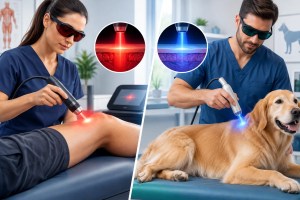
A therapeutic laser can become part of a productive clinical workflow quickly. Safety compliance should move at the same pace. This laser safety compliance guide helps healthcare and veterinary practices establish the controls, training, documentation, and accountability needed to use therapeutic laser systems responsibly while keeping treatment delivery practical.
For practice owners, compliance is not a binder that sits on a shelf. It is a repeatable operating system. Staff should know what happens before a device is powered on, who can operate it, how the treatment space is prepared, where records are kept, and what to do if an unexpected event occurs. The details vary by device, setting, patient population, and state requirements, but the operational principles are consistent.
Start With the Device’s Intended Use and Classification
Begin with the manufacturer’s labeling, user manual, and training materials. These documents define the device’s intended use, operating parameters, required controls, warnings, maintenance requirements, and compatible accessories. They are the baseline for every internal policy.
For example, Diowave systems are FDA-cleared as infrared lamps intended to provide topical heating for the temporary relief of minor muscle and joint pain, muscle spasms, stiffness associated with minor arthritis, relaxation of muscle tissue, and temporary increases in local circulation. Clinical marketing, consent language, treatment protocols, and staff discussions should remain consistent with the cleared intended use.
Laser classification also informs the level of control required. Practices should not assume that a portable device requires less attention than a larger platform. Beam characteristics, power output, operating mode, treatment duration, handpiece design, and the treatment environment all affect risk management. Confirm the classification and specified safety requirements directly from the manufacturer rather than relying on general descriptions of therapeutic laser technology.
Applicable federal, state, local, institutional, and professional requirements may differ. Many practices use ANSI laser safety standards as an operational reference, while also following their state radiation-control requirements and the manufacturer’s instructions. A qualified compliance professional or laser safety resource can help interpret requirements for a specific facility.
Assign Ownership Before You Treat the First Patient
Every practice should identify a person responsible for laser safety oversight. In larger organizations, this may be a formally appointed Laser Safety Officer. In a small chiropractic office, sports medicine clinic, or veterinary practice, the role may be assigned to a physician, practice manager, or lead clinician with documented training and authority.
The title matters less than the responsibility. The designated lead should maintain the device inventory, verify training status, approve written procedures, review incidents or near misses, coordinate service records, and ensure signage and protective equipment remain current. When ownership is vague, small lapses accumulate: expired eyewear inspections, missing treatment notes, untrained team members covering a shift, or a device moved to a room that was never assessed.
The safety lead should also define operator authorization. Not every employee needs access to the system simply because they work in the practice. Authorized users should complete manufacturer training, demonstrate competency, understand the practice protocol, and know when to pause and seek clinical guidance. Refresher training is especially valuable after software updates, staff turnover, workflow changes, or a long gap in device use.
Build a Controlled Treatment Environment
A controlled area does not have to disrupt a busy clinic. It does require intentional setup. Before treatment begins, decide where the system will be used, who may enter the area, how access will be managed, and where the device, eyewear, keys, and patient records will be stored.
Post the appropriate warning sign at the entry point when the system is in use. Keep entryways controlled during treatment, particularly in multi-provider practices where staff, patients, family members, or vendors may move through the space unexpectedly. If treatments are performed in more than one room, repeat the same room-readiness process rather than assuming one setup applies everywhere.
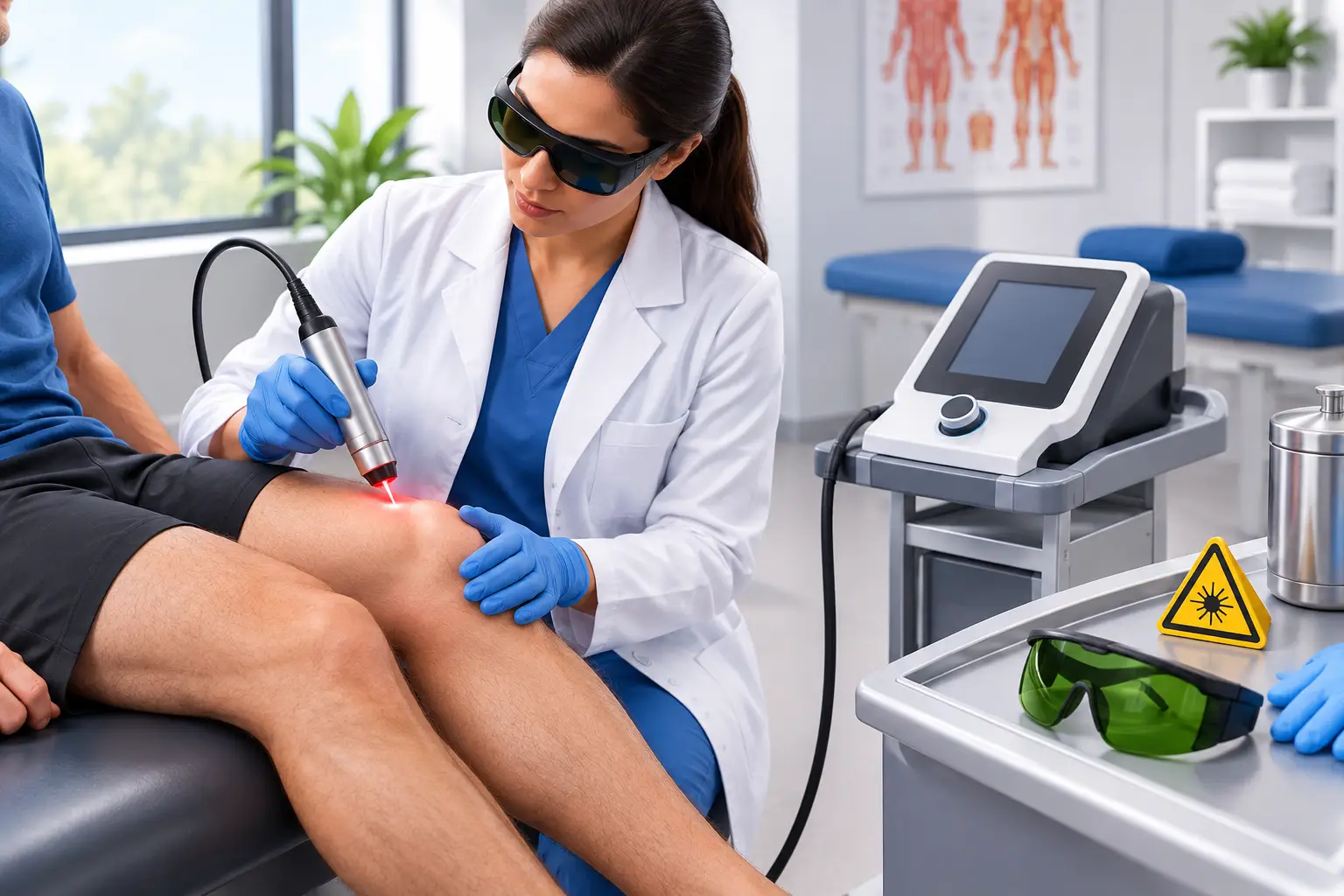
Protective eyewear must match the wavelength range and operating characteristics specified by the manufacturer. Label eyewear clearly, keep it clean, inspect it for scratches or damage, and store it where staff can reach it before activating the device. A pair of eyewear kept in a drawer across the hall is not a safety control.
Environmental review also means minimizing avoidable reflective hazards near the treatment path. The exact precautions depend on the system and clinical setup, but the principle is simple: control the space before the device is activated. Secure the unit when not in use, follow key-control procedures when applicable, and do not leave an energized device unattended.
Make Pre-Treatment Safety Part of the Workflow
The most reliable safety processes are short enough to be used every time. A pre-treatment check should be integrated into the clinical workflow, not added as an optional task when the schedule is light.
Before treatment, the operator should verify the correct patient or animal, confirm the ordered or selected protocol, inspect the device and handpiece, confirm eyewear availability for everyone in the controlled area, and ensure the treatment room is ready. The operator should also review relevant contraindications, precautions, and treatment-site considerations according to the device instructions and the clinician’s judgment.
For veterinary and equine applications, physical environment and animal handling deserve additional attention. Movement is less predictable, so the care team should determine who is responsible for restraint, where the operator will stand, how bystanders will be managed, and how treatment will stop if the animal becomes unsettled. A protocol that works well with a calm canine patient may need adjustment in a barn, training facility, or equine treatment area.
Technology can support consistency, but it does not eliminate clinical responsibility. AI-guided treatment software can help organize protocols and reduce variability in setup, yet the clinician remains responsible for patient selection, treatment decisions, room safety, and adherence to device instructions.
Document the Treatment and the Safety Controls
Treatment documentation supports continuity of care, quality review, and business operations. It should be specific enough to show what was performed without creating unnecessary administrative burden. Record the treatment date, operator, treatment area, selected protocol or parameters as appropriate, duration, patient response, and any relevant observations.
Document that required safety measures were in place when your internal policy calls for it. This may include eyewear use, controlled-area procedures, or a pre-treatment checklist. The goal is not to create a narrative for every routine step. The goal is to demonstrate that the practice has a defined process and follows it consistently.
Maintain a separate device file with the user manual, device identification information, installation or onboarding records, training certificates, service history, eyewear inventory, written policies, and incident reports. Digital storage is acceptable when records are organized, secure, accessible to the appropriate team members, and retained according to practice policy and applicable requirements.
Train for Real Situations, Not Just Completion Certificates
A training certificate is a starting point, not proof that a new operator can run a safe treatment day independently. Effective onboarding includes hands-on device operation, room setup, patient communication, protocol navigation, cleaning and storage procedures, and supervised treatments.
Training should also cover realistic interruptions. What should the operator do if someone opens the treatment-room door? What happens when eyewear is misplaced? Who can change a protocol? When should a device be removed from service? These questions reveal whether staff understand the system or have only memorized a sequence of buttons.
A useful annual review can cover four areas: device and accessory inspection, operator competency, policy updates, and incident or near-miss learning. Near misses should be treated as useful operational data, not as a reason to assign blame. If staff repeatedly skip a room check because the process is inconvenient, redesign the workflow so the safe action becomes the easy action.
Prepare for Incidents and Service Needs
Written incident procedures should be easy to locate and concise enough to use under pressure. They should explain how to stop treatment, secure the device, provide appropriate immediate response, notify the designated safety lead, document the event, and contact the manufacturer or service resource when indicated.
Do not continue using a device that appears damaged, performs unexpectedly, displays an unresolved error, or has accessories that no longer meet specification. Follow manufacturer guidance for troubleshooting and service. Unauthorized repair or improvised substitutions can compromise both performance and compliance.
Preventive maintenance deserves the same discipline as treatment documentation. Assign responsibility for checking the device, handpiece, cords, eyewear, labels, and storage condition at a defined interval. In a high-volume practice, brief frequent checks may be more practical than a single annual review. In mobile or equine settings, inspect equipment before transport and again before use at the destination.
Keep Compliance Proportional and Usable
The best laser safety program is neither casual nor unnecessarily complicated. A solo direct primary care practice may need a concise written policy, clear operator authorization, a controlled room process, and reliable documentation. A multi-site sports medicine organization may need centralized training records, standardized audits, and site-specific oversight. The right level of structure depends on the practice, but every setting needs clear accountability.
Safety compliance also supports patient confidence and staff adoption. When team members understand the clinical purpose of the technology and the safeguards behind it, laser therapy is more likely to be delivered consistently within the intended workflow. That consistency protects the practice while helping clinicians focus on the patient or animal in front of them.
Set aside time to walk through one complete treatment from room preparation to documentation with your team. The gaps that matter most are usually visible in that single, practical exercise.